Hair Restoration · Eyebrow Transplant
Eyebrow transplant in Berlin – natural brows with your own hair
Eyebrows shape the expression of a face more strongly than their small area suggests. Even individual gaps, a shortened brow tail or permanently thinned areas can noticeably change the shape.
In an eyebrow transplant, selected hair follicles are taken from a suitable donor area and placed into the brow region as fine single-hair grafts. At AS Clinic Berlin on Kurfürstendamm it is not only density that is planned: the shape, the direction of growth, the angle and the natural arrangement of the individual hairs are what matter most.
The transplanted hairs are placed almost flat to the skin and follow the natural course of each section of the brow. With eyebrows this precise orientation is decisive, because even small deviations in angle can be clearly visible later.
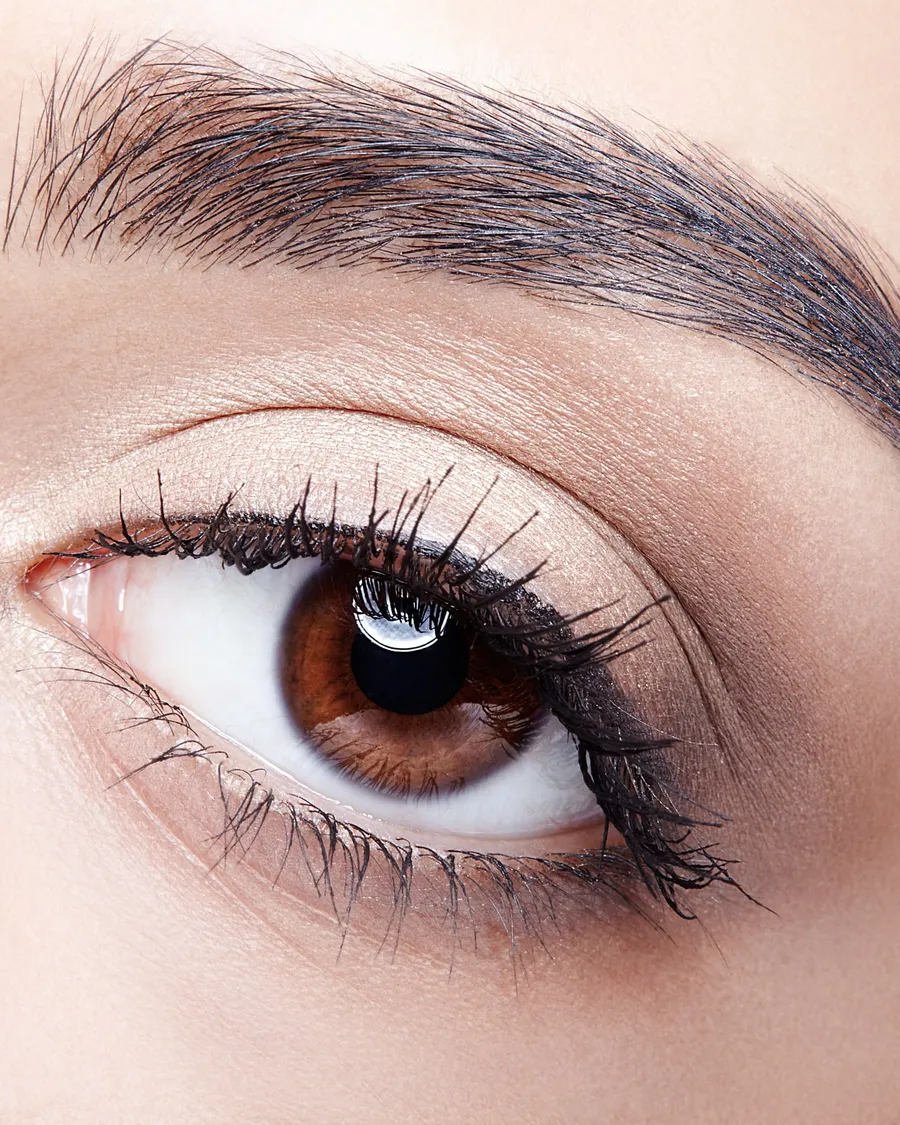
What is an eyebrow transplant?
An eyebrow transplant is a specialised form of hair transplantation using your own hair. Suitable hair follicles are taken from a donor area and transplanted individually into planned areas of the eyebrow. Unlike make-up, microblading or pigmentation, this creates real growing hair. The transplanted follicles essentially keep the growth characteristics of their donor hair, which is why the resulting brow hairs need regular care and frequent trimming. For planning, the eyebrow is not treated as one uniform line: it consists of sections with their own hair direction — the brow head at the inner end, the brow body in the middle and the brow tail at the outer end. The angle and direction change along these sections, and exactly those differences have to be taken into account during implantation.
Eyebrow transplant in Berlin – the key facts at a glance
- Treatment
- Eyebrow transplantation with your own hair
- Technique
- FUE-based extraction; implantation predominantly as single hair follicles
- Key to a natural result
- Angle, direction of growth, hair thickness and the arrangement of the grafts
- Possible goals
- Closing gaps, adding density, reconstructing the brow tail or the shape
- Donor hair
- Individually selected scalp hair, matched as closely as possible
- Location
- AS Clinic, Kurfürstendamm 102, 10711 Berlin-Charlottenburg
- Anaesthesia
- Local anaesthesia
- Recovery
- Crusts, redness and swelling are possible for a while
- New growth
- Often from about 3–4 months
- Development of density
- Over several months; do not judge the result early
- Care
- Transplanted scalp hair may need regular trimming and shaping
- Consultation
- Individual planning before the procedure
What can an eyebrow transplant be used for?
An eyebrow transplant may be an option where your own brow hairs are permanently missing or markedly thinned and a transplant appears medically and anatomically sensible in the recipient region. Where brow loss is new, inflammatory, patchy or medically unexplained, the cause should be investigated before an aesthetic procedure. Possible starting points are:
- Naturally very thin or patchy eyebrows
- Permanent gaps after years of, or heavy, plucking
- A shortened or missing brow tail
- Slight asymmetries between the right and left eyebrow
- Stable scars after injuries or procedures, where the tissue is suitable for transplantation
- Reconstruction after permanent loss of brow hair, where the cause is established and stable
More on this: Hair restoration in Berlin
Why does planning the shape matter so much with eyebrows?
With an eyebrow transplant it is not only the number of grafts that determines the result. The shape, where the brow begins and ends, the arch, the width, the density and the direction of growth all have to suit the face and the brow hairs already there. Before the procedure we therefore look at, among other things:
- The existing natural brow shape
- Facial proportions and the brow bone
- The distance between the brows and their symmetry
- The width and density you want
- The course of the head, body and tail of the eyebrow
- Existing scars or previous pigmentation
- The thickness and growth behaviour of the possible donor hair
Do eyebrows have to be perfectly symmetrical?
No. Natural eyebrows are almost never mathematically identical. The aim is a harmonious balance between the two sides, without artificially erasing natural differences altogether. An existing asymmetry can be reduced during planning; whether full matching is sensible, or possible at all, depends on the anatomy, the hairs present and the tissue.
Why are mainly single-hair grafts used for eyebrows?
Visually, eyebrows consist of individual, finely arranged hairs. Single-hair grafts allow more precise control of density, direction and contour than larger multi-hair grafts. At the edges and along the brow tail in particular, a fine, controlled distribution matters; grafts that are too coarse, or an unsuitable hair calibre, can make the result look artificial.
Why must the hairs be placed almost flat to the skin?
Natural eyebrow hairs lie at a very flat angle against the skin. If transplanted hairs are placed too steeply, they can later stand away from the face and look unnatural. The direction of implantation also changes along the eyebrow: at the inner end hairs can run more upwards or outwards, in the middle section they lie increasingly horizontally, and in the outer tail they follow a flat lateral direction. Each section is therefore planned separately — with an eyebrow, even a few misaligned hairs can stand out more than in a classic scalp transplant.
Where does the hair for an eyebrow transplant come from?
Suitable scalp hair is usually chosen as the donor hair. What matters is not only sufficient donor density, but that the thickness, structure and growth behaviour match the intended eyebrow as closely as possible. Fine hair follicles are preferred for the brows; depending on your individual hair structure, certain areas of the back, nape or sides of the head can be more suitable than others.
Why does transplanted brow hair have to be trimmed later?
Transplanted scalp hair initially keeps its longer growth behaviour. It can therefore grow considerably longer than natural eyebrow hair and has to be trimmed and shaped regularly. How often trimming is needed is individual. Some transplanted hairs change their behaviour somewhat over time, but regular brow care should be planned for from the outset.
FUE or DHI for an eyebrow transplant – what actually matters?
For eyebrows, the marketing name of the method matters less than precise single-hair extraction and controlled implantation. FUE describes extracting the follicles individually; for implantation, prepared recipient sites or implanter systems can be used depending on the plan. No technique is automatically "better" independently of the anatomy and the execution — what counts is how precisely the planned shape is realised. With the eyebrow, these points are decisive:
- Suitable single-hair follicles
- A very flat exit angle
- The correct direction of growth in each section of the brow
- Controlled density
- Careful handling of the grafts
- A matching donor hair structure
Eyebrow transplant or microblading – what is the difference?
An eyebrow transplant places real hair of your own, which then grows and needs care. Microblading or pigmentation, by contrast, creates the visual impression of hairs or shading in the skin, without creating new hair follicles. Which option makes more sense depends on whether you want real hair, how many of your own brow hairs remain and what your starting point is.
| Eyebrow transplant | Microblading / pigmentation |
|---|---|
| Real transplanted hair follicles | Pigment in the skin |
| The hair keeps growing | No hair growth |
| Regular trimming and shaping needed | Colour and shape can fade or change over time |
| A surgical procedure | Non-surgical pigmentation |
Eyebrow transplant into scars
Transplanting into a stable scar can be possible in principle. Scar tissue differs from normal skin in its blood supply, elasticity and consistency, however, so graft survival and the number of sessions needed have to be assessed individually. Before treatment it should be established that the scar has healed completely and is stable. With active inflammatory or scarring hair conditions, the underlying condition comes first.
How many grafts do you need for an eyebrow transplant?
The number of grafts cannot be set in blanket terms. It depends on whether only individual gaps, a brow tail, one side or both eyebrows are being reconstructed, and how much of your own brow hair is already there. The width and density you want, scar tissue and the quality of the donor hair also affect the requirement. Sound planning is therefore based on the area actually being treated, not on a fixed number of grafts for everyone.
How an eyebrow transplant works at AS Clinic Berlin
-
Consultation and establishing the cause
We start by discussing why the eyebrows are thinned or patchy, how long that has been the case and what result you want. With medically unexplained or active hair loss, further investigation may be necessary before the procedure.
-
Planning and drawing the brow shape
The shape you want is planned together and drawn on before the procedure. Existing brow hairs, facial proportions, symmetry, the arch, the width and the brow tail are all taken into account.
-
Choosing the donor area
We select an area whose hairs suit the eyebrow as closely as possible in calibre and structure. Choosing fine, suitable follicles particularly matters for how natural the result looks later.
-
Local anaesthesia
The donor and recipient areas are anaesthetised locally. The transplant can therefore be carried out without general anaesthesia.
-
Individual FUE extraction
The follicular units needed are extracted individually with an FUE-based technique and then carefully prepared for implantation. Predominantly single hair follicles are selected for the brows.
-
Precise implantation along the natural growth direction
The recipient sites are planned so that the hairs grow as flat to the skin as possible and follow the natural course of each section of the brow. The angle, direction and density are adjusted point by point.
-
Aftercare and follow-up
After the procedure the freshly transplanted grafts are protected while the small crusts heal. The course is then assessed over several months, because the transplanted hairs can shed first and only grow back later.
How does healing after an eyebrow transplant go?
Small crusts typically form at the implantation sites after the procedure. Redness, swelling or bruising around the eyes can occur temporarily. The grafts have to be handled particularly carefully in the early healing phase. The specific washing and care instructions are given to you individually after the procedure; crusts should not be picked off early.
Do the transplanted eyebrow hairs fall out at first?
Yes — a temporary shedding of the transplanted hair shafts in the first weeks is common after hair transplants. The hair follicle remains in the skin and can produce hair again after a resting phase. This temporary shedding therefore does not automatically mean the graft is lost.
When do the new eyebrows grow?
New growth often begins from about the third to fourth month. Density then continues to develop step by step, because not all transplanted follicles enter a new growth phase at the same time. Judging the result after a few weeks is therefore not meaningful.
When do you see the final result?
The eyebrows develop over several months. A clearer assessment is often possible after about six to eight months; maximum density can continue to develop for roughly 8 to 12 months. Whether a second session for added density makes sense should only be decided once enough growing time has passed.
How do you care for transplanted eyebrows long term?
Because the transplanted hairs usually come from the scalp, they can grow longer and faster than natural brow hairs. Regular trimming, brushing and gentle shaping is therefore part of long-term care. Early in the growth phase it can also make sense to lay the hairs carefully in the desired direction. Aggressive plucking of the transplanted hairs should be avoided.
Risks and possible side effects
An eyebrow transplant is a surgical procedure and not entirely free of risk. Besides temporary reactions, the direction of growth, graft survival and symmetry in particular can affect the aesthetic result. With eyebrows, an incorrect direction of growth matters aesthetically more than almost anything else — planning the angle and direction is therefore a central part of the procedure. Possible risks and reactions include:
- Swelling and bruising around the forehead and eyes
- Redness, crusting and tenderness
- Infection or folliculitis
- Temporary changes in sensation
- Insufficient or delayed growth of individual grafts
- Different density between the two sides
- An unwanted direction of growth or too steep a hair angle
- Visible irregularities in the donor or recipient area
- The need for later densification or correction
Which symptoms after the procedure should be assessed?
Severe or increasingly unusual pain, markedly increasing redness, pus, fever, pronounced one-sided swelling or other unexpected symptoms should be assessed medically promptly.
Who may an eyebrow transplant be suitable for?
An eyebrow transplant may be an option for adults where brow hair is permanently missing, sufficient donor hair quality is available and the cause of the hair loss is stable or established. Among the things taken into account are:
- The cause and duration of the brow hair loss
- The brow hairs you still have
- The condition of the skin and any scarring
- The quality and structure of the donor hair
- Previous microblading or pigmentation treatments
- Pre-existing conditions and medication
- Realistic expectations of density and shape
When should an eyebrow transplant not be carried out, or only later?
With active inflammation, infection or unstable hair-loss conditions in the brow region, a procedure can be unsuitable or postponed. Certain illnesses, medicines, clotting problems or other individual risk factors can also speak against an immediate procedure. Prescribed medicines should never be stopped or paused on your own initiative for a transplant.
Eyebrow transplants for women and men
An eyebrow transplant is not limited to one gender. The shape is planned according to the existing anatomy, the natural course of the brow and your personal goal – not to a rigid female or male template. Some people want a fine densification, others a full reconstruction or stronger definition. The planning should always suit your individual face.
Eyebrow transplant on Kurfürstendamm in Berlin-Charlottenburg
AS Clinic Berlin is located on Kurfürstendamm in Berlin-Charlottenburg. If you are looking for an eyebrow transplant in Berlin, a hair transplant for patchy eyebrows or the reconstruction of brow areas, your individual starting point is assessed first.
AS ClinicKurfürstendamm 102
10711 Berlin · Charlottenburg
+49 179 390 2489
Mon – Fri · 10:00 – 19:00
Saturday · 10:00 – 16:00
Sunday · Closed
More on this: AS Clinic Berlin on Kurfürstendamm — location and directions
Why choose AS Clinic for an eyebrow transplant in Berlin?
Single-hair planning rather than coarse densification
For the eyebrow, the grafts are planned according to shape, density and position. The edges and the brow tail in particular need a fine single-hair distribution.
Direction of growth as a central goal
The hairs are implanted as flat to the skin as possible and along the natural course of each section of the brow. It is the later appearance, not the number of hairs alone, that is the focus.
An individual brow shape
No universal template is transferred onto every face. The brows you have, your facial proportions and the shape you want are considered together.
Realistic information about later growth
Transplanted scalp hair keeps growing and needs long-term care. Possible shock loss, the time growth takes and the option of later densification are all covered in advance.
Medical qualification
Nader Farahwaschy – specialist in surgery. Medical licence since 2004; specialist recognition in surgery from the Berlin Medical Association since 2011.
Questions
Frequently asked questions about eyebrow transplants in Berlin
Twenty answers written by our physicians.
What is an eyebrow transplant?
Which method is used for an eyebrow transplant?
Why are individual hairs transplanted?
How many grafts do you need for eyebrows?
Where does the hair for the eyebrows come from?
Do transplanted eyebrows grow permanently?
Do transplanted eyebrows have to be trimmed?
Do the transplanted hairs fall out at first?
When do the new eyebrows grow?
When do you see the final result?
Can a second session be necessary?
Can eyebrows be transplanted after heavy plucking?
Can scars in the eyebrow be transplanted?
Can you have an eyebrow transplant after microblading?
Which is better: an eyebrow transplant or microblading?
Is DHI better than FUE for eyebrows?
Does an eyebrow transplant hurt?
How long does healing take?
How long will I look noticeably treated?
Can the eye region swell?
What are the risks of an eyebrow transplant?
Why does the hair angle matter so much?
Can an eyebrow transplant even out asymmetries?
Is an eyebrow transplant suitable for men?
Is an eyebrow transplant possible with hair-loss conditions?
What does an eyebrow transplant cost at AS Clinic Berlin?
Where can I have an eyebrow transplant in Berlin?
Related treatments at AS Clinic Berlin
Beard Transplant
Beard transplant in Berlin: the same single-hair principle, planned for the beard line.
PRP Meso Hair
PRP and hair mesotherapy in Berlin: supporting treatments around a transplant.
Hair Meso
Hair mesotherapy in Berlin: micro-injections for the scalp and hair.
Botox
Botox in Berlin: treats the muscles around the brows, not the brow hair itself.
Eyes Mesotherapy
Eye mesotherapy in Berlin: skin quality around the eyes.
Skin Booster
Skin Booster in Berlin: injectable hydration for skin quality.
Appointments
Arrange an eyebrow transplant consultation in Berlin
Do you have permanently patchy, very thin or partly missing eyebrows and want to know whether a transplant of your own hair is suitable for you? Arrange a personal consultation at AS Clinic Berlin on Kurfürstendamm. We discuss the brow hairs you have, the shape you want, the donor hair, the direction of growth, the possible number of grafts, the risks and the realistic timeline.